I recently found out someone “stole” my best content and was sharing it as their own without my knowledge.
Instead of being angry, I was thrilled.
Here’s why: When your content is so good enough that people literally want to steal it and pass it off as their own, you’ve created something truly valuable.
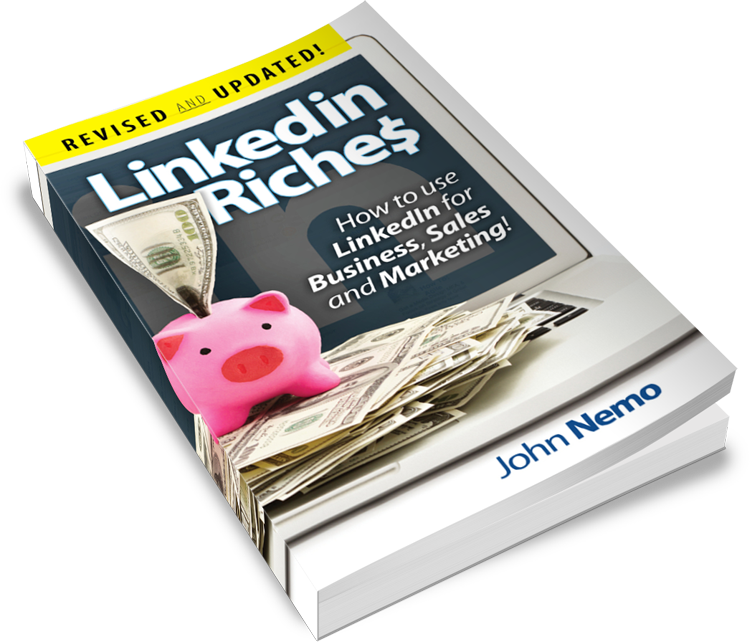
In this instance, it was a rather comical effort – someone used a photo copier to scan a hard copy of this entire book (LinkedIn Riches) into a PDF, and then posted the book on Amazon for sale as their own.
The only problem was, they forgot to remove all of my personal stories and even my “popcorn bucket” photos …
I would argue that’s a pretty distinctive hint at who the author really is. 🤣
Online “Pirates” + Business Perspective
Over the years, I’ve also had online “pirates” steal my paid courses and offer them on “black hat” websites for a fraction of what I charged.
In my early days as an entrepreneur, these instances sent me into a panic. After all, I was trying to feed my family on $3 book royalties and $47 course sales. Having someone give away my “secret sauce” for free felt like they were stealing food right off my table.
Back then, I’d spend hours trying to chase down these “content pirates,” even considering hiring lawyers to go after them.
One attorney told me something I’ll never forget: “Look, it’s a game of whack-a-mole. You might get three sites to take your content down, but they’ll just pop up on four new ones tomorrow.”
Also, think about the type of people who go looking for pirated content – they were never going to pay full price for your products and services anyway.
Here’s what I’ve learned after over a decade of creating content: The more people who see your best material, the more opportunities you’ll create for yourself and your business.
Once I reached that realization, it was a complete mindset shift from where I’d started.
Instead of viewing my “stolen” content as lost revenue, I now see it as free marketing.
The Magic of Giving Your BEST Tips Away For Free
Here’s what typically happens when someone shares your content (legally or otherwise) online:
1. They become an unofficial brand ambassador, telling others about you and your approach, helping promote you and building your brand. They also lend credibility and authority to your content – people only share content that makes them look smart, insightful or cool. (Remember Dale Carnegie: People only care about themselves!)
2. The people they share it with get to “sample” your expertise risk-free and, if they like what they see, will look you up online to find out more, discover more of your content, etc.
3. Always (ALWAYS!) a certain percentage of those people who got introduced to your free content somewhere online will want more direct access to you, and will want your paid or premium services as a result.
Creating Content Worth “Stealing”
The real question isn’t “How do I protect my content?” but rather “How do I create content so valuable people want to steal it?”
We’re living in what my business coach calls the “synthetic” era of content creation. Thanks to AI tools, anyone can generate basic tips and advice in mere seconds.
Want a list of “10 Ways to Improve Your LinkedIn Profile”?
ChatGPT will spit that out faster than you can say “artificial intelligence.”
But here’s what AI can’t replicate: YOUR unique story, YOUR personality, and YOUR real-world experience getting results for clients.
That’s why the content that gets “stolen” and shared most often combines these key elements:
-
Your best tactical advice and strategic insights
-
Case Studies and examples showing real people getting real results
-
Your authentic personality and communication style
-
Personal stories that showcase your journey and make you relatable, likable, approachable, etc.
-
Unique frameworks and methodologies you’ve developed
Look at it this way – it’s like being a master chef who publishes all your best recipes in a free online cookbook. Sure, anyone can follow the recipes at home. But there will always be people who’d rather have YOU cook the meal for them.
In fact, they’ll pay you to fly to their home, source the meal’s ingredients yourself, prepare the entire meal from scratch, serve it to them with an explanation for the thinking behind each course, wash the dishes and more!
Don’t Claim – Demonstrate!
Thanks to AI, generic and simple recipes for success are everywhere now.
The real way to stand out is to share your top-shelf tips and insights – the stuff clients pay you for.
Doing so demonstrates that you’re an expert – far more than just claiming you’re really good via testimonials or other forms of social proof.
Remember, not everyone wants to do the work – they’re happy to hire an expert to get results.
Putting Yourself in the Shoes of a Prospect
For instance, if a CPA on LinkedIn offered me a free eBook on the top ways Minnesota-based Small Business Owners can save on taxes at the state and federal level, I’d say YES in an instant.
I’d read their eBook, and scan their list of tips / strategies to make sure my CPA is using all of them.
If my CPA isn’t, then I’d want to know why.
Is my CPA just lazy, only doing the status quo? After all, I want my CPA on the cutting edge, looking around corners and staying ahead of the curve to get me the best possible tax savings every single year.
Depending on how my CPA stacks up to what I discover in the eBook, I might end up switching to this new person who offered me the free eBook.
After all, this new CPA demonstrated expertise and insight that is niche-specific to my little world as a Minnesota-based Small Business Owner, and showed me areas where my current CPA is falling short.
Say too that in this free eBook, the other CPA also shared his or her personal story – how and why he or she became a CPA, his or her passions outside of work, family time, etc. Also, what if, in this eBook, the CPA shared real-life examples of Minnesota-based business owners just like me who utilized certain tips to get savings, etc.
What if, as a result, I related to this new CPA more?
What if I felt like he or she is the type of person who values the same things I do?
That he or she is all about family, or fun, or whatever it is that I look for in a vendor / friend … and they are an expert, offering things my CPA has never mentioned before?
Why wouldn’t I switch?!
Proof of Concept
I literally give away my ENTIRE LinkedIn Lead Generation blueprint (including specific scripts, strategies, tips, etc.) in my book LinkedIn Riches, which you can download for free on my website.
A prospect who recently read the book told me this the other day: “I can’t believe how much valuable content you put into a free book. I have to say, damn, if you’re free tips are this good …”
The prospect then went on to relate how she went back to every single email I’ve ever sent and read through each one of them, bingeing on my free content.
She also shared more about her story, and why (so far) she doesn’t think my paid material is right for her at this stage of her LinkedIn lead generation journey.
Which is totally fine!
You know why?
That person just became (without knowing it) an unpaid sales person for me.
Who do you think she’s going to recommend when colleagues, friends or others ask her, “Hey, do you know anyone who’s good at LinkedIn lead generation?”
She’ll do a better job selling me than I could! 🤣
And that’s why you want to give away your best stuff for free.
Ready for a Calendar Overflowing with Qualified Leads?
With our LinkedIn Authority Advantage service, you’ll:
✅ Wake up to a calendar full of qualified calls
✅ Only speak with hyper-qualified leads
✅ Create a lead machine that runs without ads, spam or endless content
👉 Click here to get started! (Takes 60 seconds)